Discover Lee Je-hoon movies and dramas by their emotional engine: compare Signal, Taxi Driver, Move to Heaven and Architecture 101 through four distinct roles.
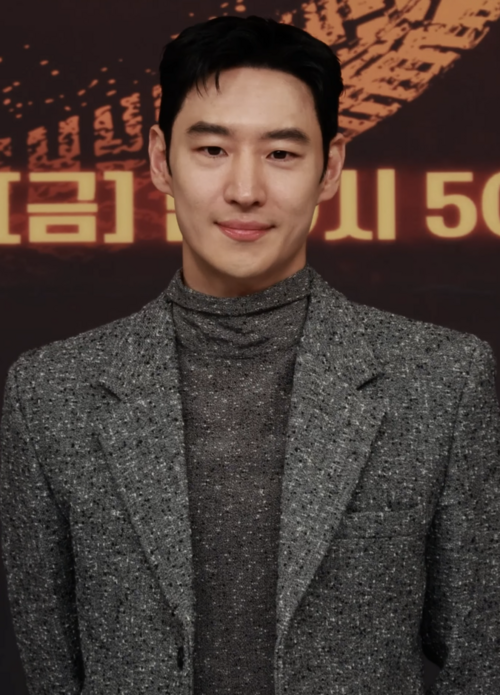
Lee Je-hoon — photograph (2025-11-18). Photo: TV10 / Wikimedia Commons, CC BY 4.0. Original source. Commons video screenshot; scaled for display. Disclose any additional crop.

CELEBPEDIA / FOUR KINDS OF UNFINISHED BUSINESS
A cold case.
A borrowed identity.
A room full of memories.
Several useful starting points in Lee Je-hoon’s work involve something left unresolved. Signal revisits crimes that have resisted answers. Taxi Driver pursues retaliation on behalf of people who have been harmed. Move to Heaven listens to lives through the objects that remain, while Architecture 101 returns to the uncertain language of first love.
Those premises ask for different kinds of attention. This guide compares three series with one film, giving you a choice between investigation, action, intimate storytelling and romantic memory. The roles are distinct enough that a second selection can reveal a very different register.
| Work | Lee’s character | Follow it for |
| Signal | Park Hae-young | Investigations linked across time |
| Taxi Driver | Kim Do-gi | Action and elaborate retaliation |
| Move to Heaven | Sang-gu | An uneasy partnership and human stories |
| Architecture 101 | Young Seung-min | First love recalled through two periods |
Signal: when a message changes the investigation
Lee plays Park Hae-young, a profiler on a long-term cold-case team. tvN’s official character profile introduces him as observant, skeptical and distrustful of institutions. The series premise connects investigators in the present and past through radio transmissions.
Pick this when you enjoy working through evidence and considering what a new piece of information changes. The communication device gives an ordinary case file a different dimension: an event’s place in time becomes part of the problem.
Hae-young’s doubts matter alongside his deductions, so watch how he responds when information challenges an assumption. Begin with the original series and follow the cases in sequence; reading a complete timeline first would remove much of the discovery.
Taxi Driver: when the driver has another assignment
As Kim Do-gi, Lee works for Rainbow Taxi in a story organized around a private revenge service. SBS’s official series page introduces that revenge framework, and its character profile identifies Do-gi as a former special-forces officer now driving for the company.
The taxi provides an entry into operations that require more than driving skill. This is the selection for viewers interested in tactical action, constructed personas and the satisfaction of watching a plan take shape.
Its crimes and retaliation can be harsh, so expect more than a light undercover caper. Start with the first season to meet the team and understand the service before moving through later installments. You can then judge whether the balance of action and moral tension suits you.
Move to Heaven: when the objects do the talking
Here, Lee’s Sang-gu unexpectedly becomes guardian to his nephew Geu-ru, played by Tang Jun-sang. They work together as trauma cleaners, clearing the belongings of people who have died and discovering the stories attached to them. Netflix’s official casting announcement confirms Lee’s role and the uneasy family arrangement.
A room and its contents become a different kind of evidence. The emphasis falls on understanding a person’s life and communicating what has been left unsaid. Sang-gu’s difficulty adjusting to responsibility gives the series a continuing relationship to follow between individual stories.
Choose this for emotional detail and an unusual working partnership. Bereavement is central to the premise; give yourself space for that mood rather than approaching it as another crime-solving vehicle.
Architecture 101: when memory becomes a second viewpoint
Lee plays the younger Seung-min in this romantic film. Uhm Tae-woong portrays the character as an adult, with Suzy and Han Ga-in similarly playing Seo-yeon at different ages. The Korean Film Council’s film entry identifies this split casting and the movement between past and present.
The architecture setting gives the relationship a material focus: a home can be planned and rebuilt, while remembered encounters remain harder to settle. Lee’s section of the story is the younger man’s experience, so distinguish that perspective from what the adult characters know.
This is the compact choice when you want a feature film and quieter romantic uncertainty. Follow the shifts between the two periods without looking up the ending; the comparison is part of the film’s structure.
Choose the next kind of attention
Signal asks you to track information. Taxi Driver asks you to follow an operation. Move to Heaven invites attention to people and possessions. Architecture 101 turns that attention toward memory.
Does Lee play both ages in Architecture 101? No: he plays young Seung-min. Explore the other side of that pairing in our Suzy watchlist, or find another mix of action and romance in our Ji Chang-wook dramas guide.
'Korea Fan Guides' 카테고리의 다른 글
| Kim Go-eun Movies and Dramas: Where to Start Beyond Goblin (0) | 2026.10.28 |
|---|---|
| Cha Eun-woo Dramas: From True Beauty to Wonderful World (0) | 2026.10.28 |
| Kim Se-jeong Dramas: Romance, Counters and New Beginnings (0) | 2026.10.28 |
| Kim Seon-ho Movies and Dramas: A Watchlist by Role (0) | 2026.10.28 |
| Ji Sung Dramas: Kill Me Heal Me, The Devil Judge and More (0) | 2026.10.28 |