For a Korean music-show audience place, first identify who is accepting applications: the broadcaster or the performing artist's official fan community. Then check the exact session, eligibility and identity requirements. An artist's appearance on television does not establish that an audience application is open to you.
This guide helps international fans compare those routes and organise the details. For the wider holiday, start with our first Korea fan-trip checklist. For a separately ticketed concert, use our concert-ticket checklist; a broadcast audience application has its own process.
1. Identify the application route
Begin at the broadcaster's programme page or the artist's official notice feed. Check that the link actually concerns the performance and audience session you want. The official KBS Music Bank application page, for example, lists individual episodes with their venue, announcement date and age rating. Read the entry for your intended episode rather than treating a programme name as a reservation.
| What you found | What to establish | Keep separate |
| A broadcaster audience page | The episode, account requirements and current application status | The programme's audience process and an artist's fan allocation |
| An artist participation notice | The session and every eligibility condition in that notice | Community registration, paid membership and qualifying purchases |
| A successful application message | Whether it confirms admission, a participant number or a waiting-list position | Submitting a form and receiving an allocated place |
Give your saved notes a clear heading: programme, artist, session and date. This helps prevent a useful notice for one event becoming mistaken instructions for another.
2. Read eligibility as a complete set of conditions
Artist allocations can involve several requirements together. As a past example, &TEAM's notice for M Countdown on 10 September 2026 required a specified fan-club membership and qualifying album purchases through the stated sales channel. It distinguished accepted editions and also set age conditions involving the event and platform rules. Those were conditions for that event, not a universal shopping list for music shows.
Before spending, make a line for each requirement: eligible account, membership, qualifying item, accepted purchase channel and any additional evidence. Mark unresolved points and consult the official organiser. Buying an album without checking its edition or sales channel can leave the original eligibility question unanswered.
Check validity through the event date. ENHYPEN's notice for MusicCore on 24 January 2026 required membership to remain valid at attendance, and included guardian-consent conditions for minors. A parent's agreement does not by itself answer every show's minimum-age requirement.
3. Match your application to accepted identification
Read the non-Korean participant section rather than borrowing a Korean attendee's document list. In the past TUIDE Music Bank notice for 18 September 2026, non-Korean participants were directed to a passport or residence card; the notice required valid identification matching the application and rejected photographs or screenshots of ID. It also specified passport verification for names entered in English.
Compare the spelling and order of your name before submitting. Keep the required original document accessible and protect it during the journey. If the notice does not resolve your particular document or name format, ask the official organiser before making a plan that depends on admission.

Personal items prepared for a day at an event.
4. Put application, roll call and recording in your calendar
These can be different appointments. Record the time zone exactly as published, then add your own reminder. Make separate entries for the application window, result check and attendance check. Distinguish a broadcast date from the time you must be physically present.
A useful past example is BOYNEXTDOOR's M Countdown notice for 1 October 2026: it listed a midnight recording with roll call on the preceding evening. The notice illustrates why the weekday and full calendar date matter. It does not establish the schedule of a later recording.
Plan the journey from your accommodation to the stated roll-call location. A pin for a television company is less useful than the correct public entrance and meeting point. Leave room for the walk and for finding the authorised queue.
5. Confirm the result and your attendance status
Follow the notice's selection method. The September TUIDE example used an announced first-come application window and separated confirmed participants from waiting-list numbers; waiting-list admission depended on conditions on the day. It also directed applicants to their event-application history for results.
Save your own confirmation privately. Note what action is still required and when to check again. Avoid building a non-refundable itinerary around an unconfirmed application or waiting-list position. If your plans change, reread the organiser's cancellation and absence rules rather than simply assuming that missing the event has no consequence.
6. Follow the broadcaster's own ticket instructions
The official SBS Inkigayo audience page currently requires an identity-verified account, or, for foreign users, an account with a registered birth date. It excludes visitors under 15 even when accompanied by parents and states that each successful ticket admits one person.
Its instructions explain checking the result and mobile ticket in the app. Crucially, staff operate the entrance button after checking identification at the venue; pressing it yourself beforehand can invalidate the ticket. The page also prohibits transferring or selling audience tickets and prohibits photography and video, including bringing a camera.
Keep those SBS instructions attached to the SBS booking in your notes. Another show's ticket, guest allowance or entry control should be checked on its own terms.
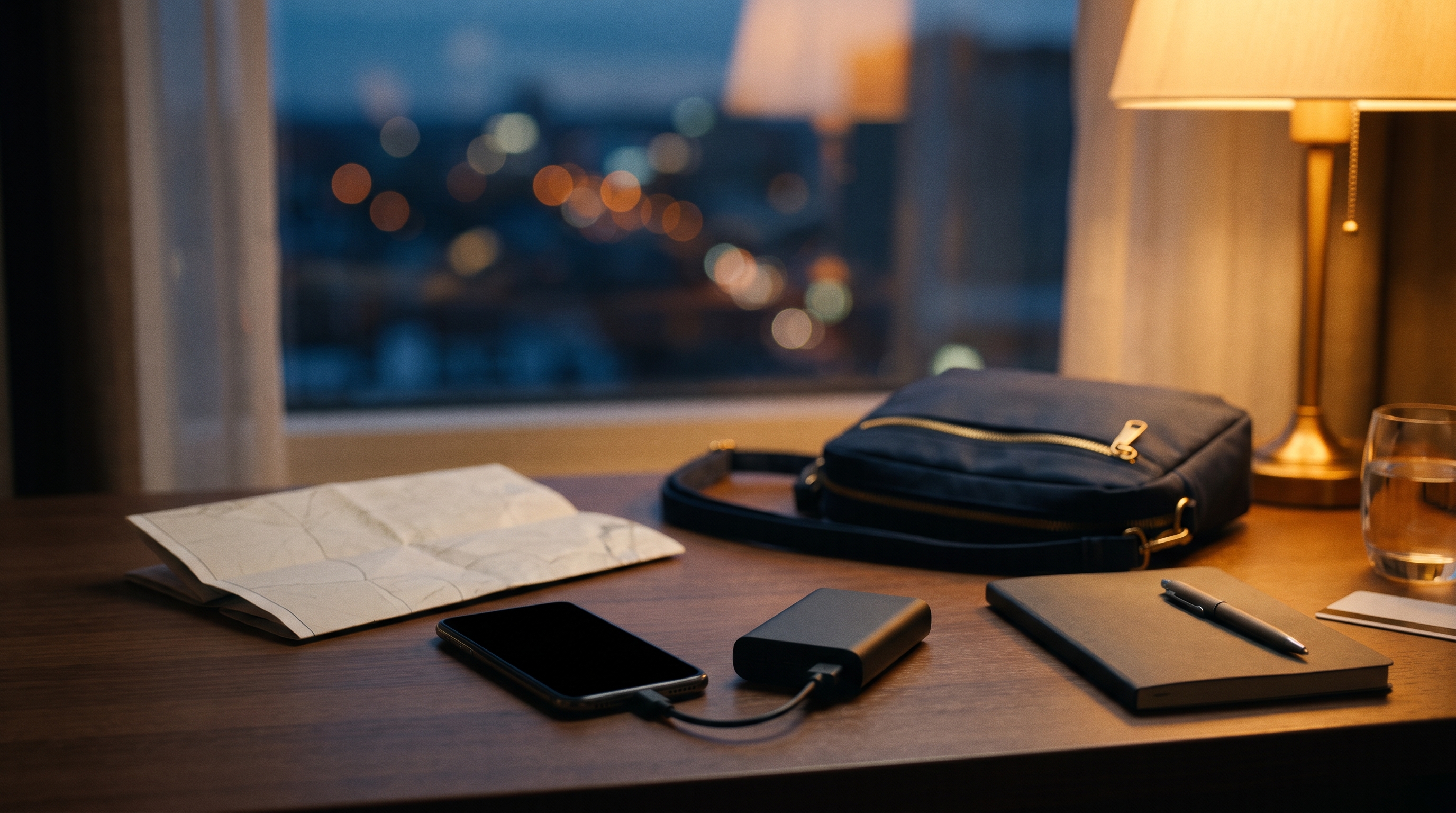
Planning the next day’s route, phone power and notes.
7. Leave enough room for the actual visit
Once a place is confirmed, build a simple attendance plan: accommodation departure, roll call, the required stay and the return journey. Keep your phone charged for official updates. Decide where your luggage will stay before leaving; an application page is not evidence of a luggage-storage service.
Pack from the current permitted-items list. A camera that is useful for sightseeing may be incompatible with the studio's rules. Keep the rest of the day flexible and follow staff instructions about queues, seating and departure. Make an alternative sightseeing plan you can enjoy if an application is unsuccessful.
Questions to settle before applying
Does joining a fan community guarantee a place?
No. Establish the eligibility rules, application process and result for the specific event. Keep membership and confirmed admission as separate items in your planning notes.
Does a pre-recording place include the live broadcast?
Read the notice for that allocation. Do not add another session to your itinerary until its admission arrangements are confirmed.
Can a friend attend using my confirmation?
Do not assume an application can be transferred. Check the organiser's identity and transfer rules before making arrangements for another person.
What if no suitable audience application is available?
Keep the trip worthwhile without it. Choose another publicly offered activity from a current official listing, and check its own booking conditions instead of treating studio attendance as guaranteed.
Official information checked on 26 October 2026. Dated artist notices above are past examples, not open invitations or current application windows. Recheck the notice for your intended session before applying or travelling.